

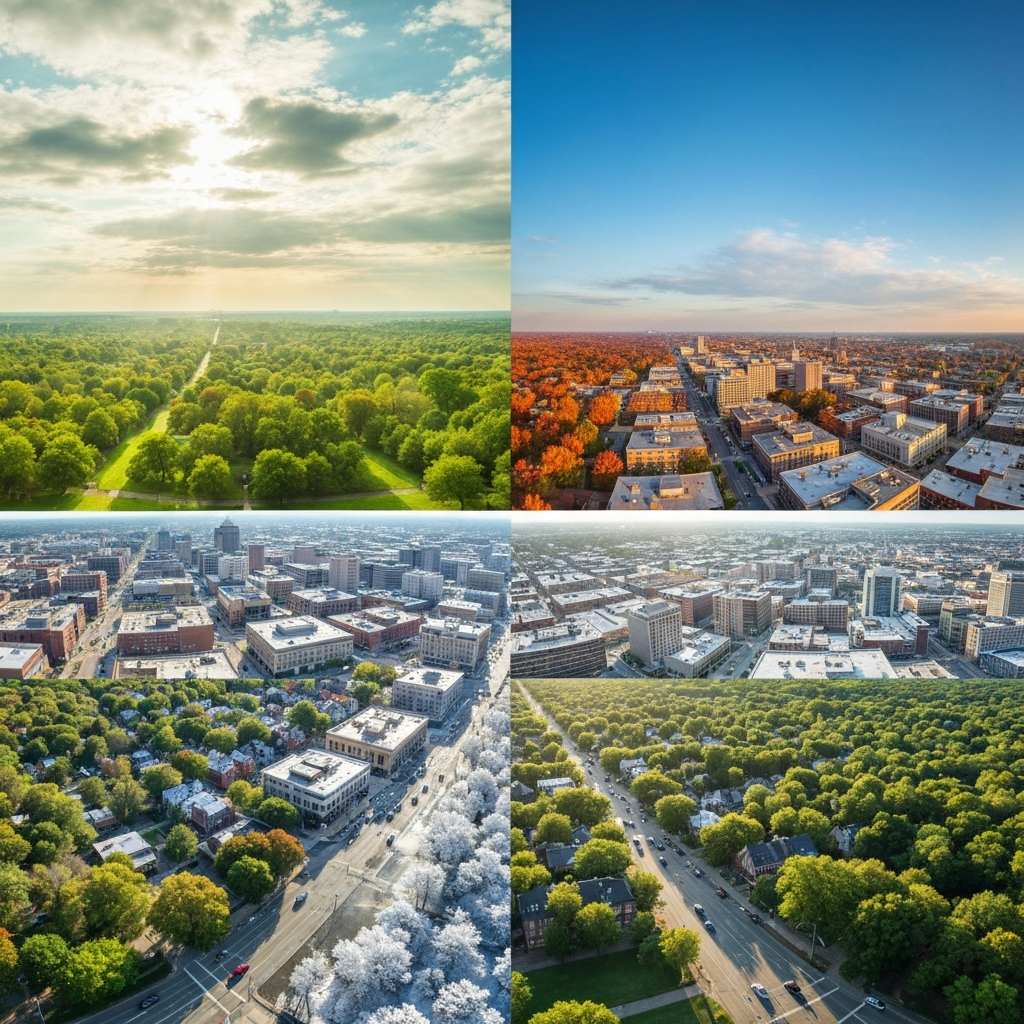
Indianapolis, the capital of Indiana, experiences a humid continental climate characterized by four distinct seasons: hot summers, cold winters, and mild spring and fall periods. This climate pattern offers residents and visitors a diverse range of weather conditions throughout the year.
Seasonal Weather Patterns
Spring
Spring in Indianapolis brings gradually warming temperatures and increased rainfall. Average temperatures rise from the mid-40s°F (7°C) in March to the mid-60s°F (18°C) by May. This season is marked by blooming flora and is often accompanied by occasional thunderstorms.
Summer
Summers are typically warm and humid, with average high temperatures in the mid-80s°F (29°C). July is usually the warmest month, with temperatures occasionally reaching the low 90s°F (32-34°C). The city receives a fair amount of rainfall during this season, contributing to the lush greenery.
Autumn
Autumn sees a gradual cooling, with temperatures dropping from the mid-70s°F (24°C) in September to the mid-50s°F (13°C) by November. The season is renowned for its vibrant fall foliage, making it a picturesque time in the city.
Winter
Winters are cold, with average low temperatures in the low 20s°F (-6°C). January is typically the coldest month. Snowfall varies annually but averages around 25 inches (64 cm) per year, providing opportunities for winter sports and activities.
Environmental Challenges and Climate Change
Recent studies indicate that Indianapolis is experiencing environmental challenges linked to climate change. The city has seen an increase in extreme heat events, with more frequent and prolonged heat streaks. For instance, in 2025, Indianapolis experienced its fourth heat streak by July, an eight-day event, whereas in 2024, the first such occurrence didn’t happen until mid-September. These prolonged heat events pose significant risks to public health.
Additionally, the urban heat island effect exacerbates warming in densely populated areas. Approximately 38% of Indianapolis residents live in areas experiencing elevated temperatures of 8°F or more due to urban heat island effects. This phenomenon occurs when urban surfaces and structures trap heat, making cities hotter and increasing the risks of heat-related health issues.
Furthermore, the city’s decades-old stormwater system faces challenges due to increasingly intense storms. The Department of Public Works has initiated steps to address these issues, including preserving floodplains to manage stormwater more effectively.
Conclusion
Understanding Indianapolis’ climate and the ongoing environmental challenges is crucial for residents and policymakers. By staying informed and proactive, the community can better prepare for and adapt to the evolving climate conditions, ensuring a resilient and sustainable future for the city.