

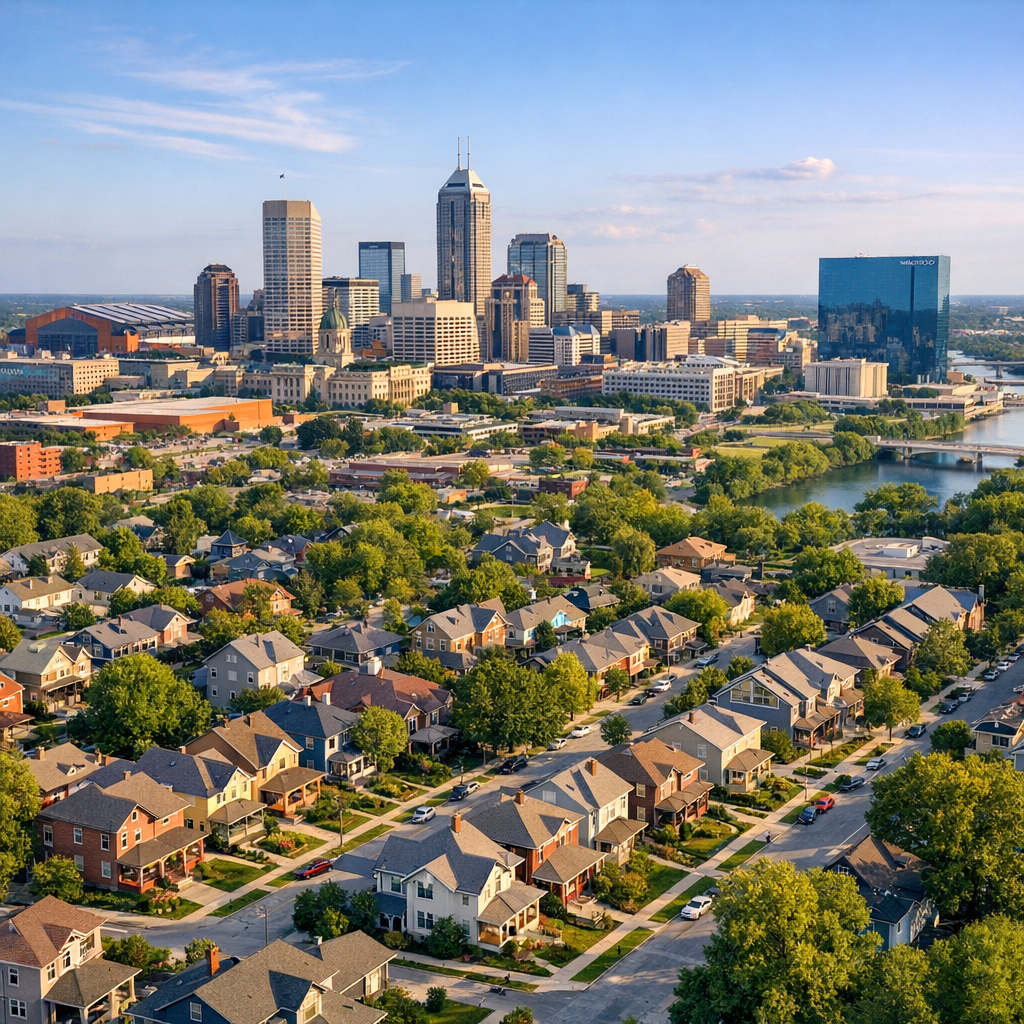
Indianapolis’ real estate market is experiencing notable shifts, presenting both challenges and opportunities for residents and investors alike.
Home Prices and Market Trends
As of June 2026, the median sale price for homes in Indianapolis stands at $255,000, reflecting a 1.9% increase from the previous year. Homes are typically on the market for about 28 days, indicating a competitive environment for buyers. Additionally, the average home value is $233,826, marking a slight 0.5% decrease over the past year. This nuanced landscape suggests that while prices are generally stable, certain areas may offer more favorable conditions for buyers.
Rental Market Dynamics
The rental market in Indianapolis remains relatively affordable compared to national averages. The median monthly rent is $1,273, below the national median of $1,487. However, a significant portion of renters are considered severely cost-burdened, spending more than half of their income on housing. This underscores the ongoing need for affordable rental options in the city.
Development and Affordable Housing Initiatives
Efforts to expand affordable housing are underway. The Indianapolis Neighborhood Housing Partnership (INHP) has initiated the construction of two affordable homes in Beech Grove, marking their first development within the city limits. Similarly, the Kinwood Place Apartments, a 144-unit income-restricted community on the city’s south side, recently celebrated its grand opening, contributing to the availability of affordable housing options.
Office Space and Urban Development
Downtown Indianapolis is witnessing a shift in office space dynamics. In the first quarter of 2026, the area experienced a loss of 203,000 square feet in office occupancy, reversing gains from late 2025. This trend aligns with national patterns of increased office vacancies, influenced by evolving work habits post-pandemic. Conversely, suburban areas have seen a surge in office space demand, with a gain of 357,000 square feet, indicating a shift in commercial real estate preferences.
In response to these changes, the city is exploring innovative development projects. One such initiative is the proposal to cap a portion of the I-65/I-70 Inner Loop, particularly the recessed “South Split” at Virginia Avenue. This project aims to reconnect neighborhoods and stimulate development by reclaiming urban space lost during the highway’s construction in 1975.
As Indianapolis continues to evolve, staying informed about these trends is crucial for making informed decisions in the real estate market.