

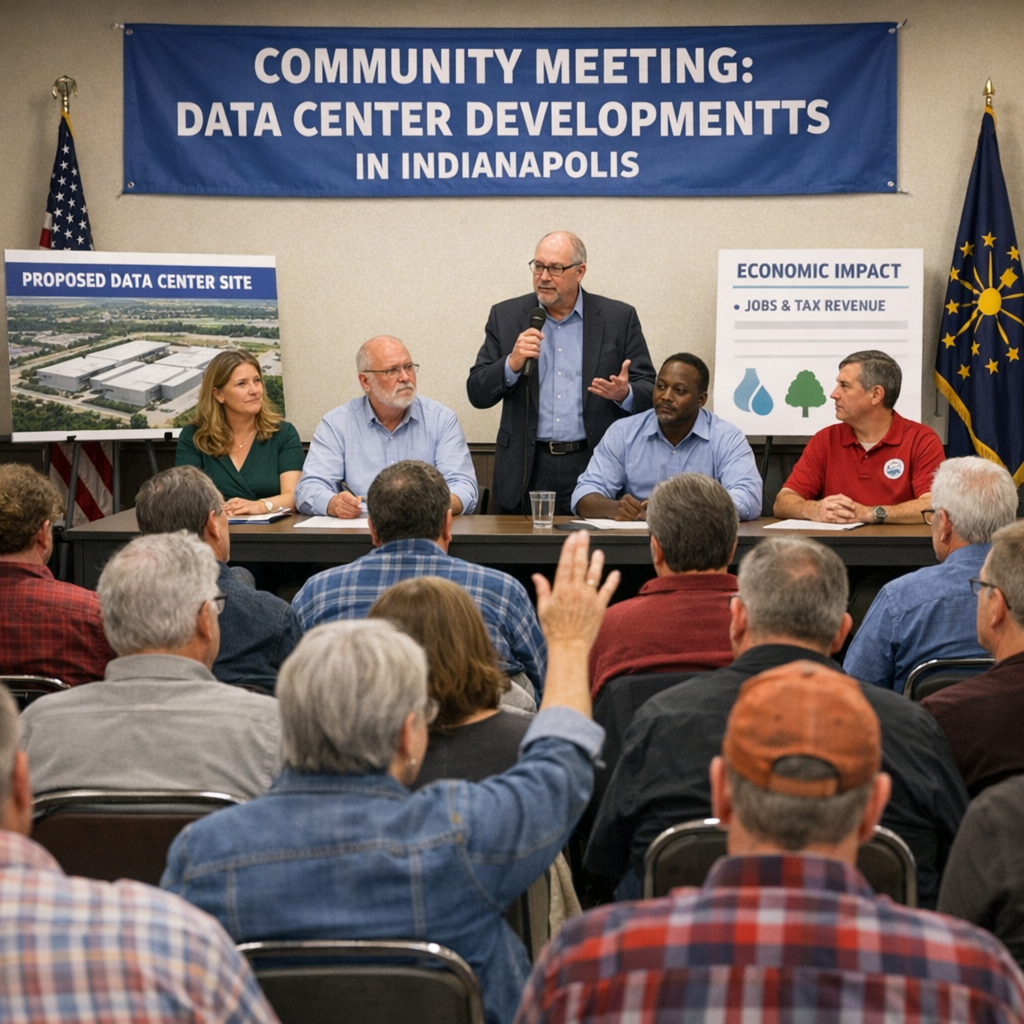
Indianapolis is experiencing a surge in data center proposals, prompting city officials and residents to address the implications of these developments on local communities and infrastructure.
Understanding Data Centers and Their Impact
Data centers are facilities that house computer systems and associated components, such as telecommunications and storage systems. They are essential for supporting digital services but can have significant environmental and infrastructural impacts, including high energy and water consumption, noise pollution, and increased traffic.
Community Concerns and City Response
Residents have raised concerns about the potential negative effects of data centers, particularly regarding noise levels, visual impact, and strain on local utilities. In response, the Indianapolis Department of Metropolitan Development has proposed new zoning regulations to manage the growth of data centers. These draft rules aim to regulate aspects such as size, location, usage, and noise levels of data centers within the city.
Key provisions of the proposed ordinance include:
- Establishing a new SU-47 special-use zoning district requiring full rezoning procedures and public hearings for each proposed data center.
- Setting noise limits at 65 decibels at the property line.
- Mandating a 200-foot buffer between data center buildings and residentially zoned land.
- Restricting backup generator testing to between 7 a.m. and 5 p.m. to minimize noise disturbances during evening hours.
Despite these measures, some community members and advocacy groups argue that the proposed regulations do not go far enough in protecting neighborhoods from the potential adverse effects of data centers. They call for more stringent limitations on where these facilities can be built and how they operate.
Recent Developments
The Indianapolis City-County Council recently passed a nonbinding resolution calling for a moratorium on new data center construction. This move reflects growing official opposition to data center developments without updated operational and zoning standards. The resolution underscores the need for comprehensive regulations that balance technological advancement with community well-being.
Looking Ahead
The proposed zoning changes are scheduled for a public hearing before the Metropolitan Development Commission on May 20. This hearing will provide an opportunity for community members, developers, and city officials to discuss the draft ordinance and its potential impact on Indianapolis. As the city navigates this complex issue, it remains crucial to find a balance that fosters technological growth while preserving the quality of life for its residents.