

Indianapolis is actively addressing environmental challenges through a series of community-driven initiatives and sustainable practices. These efforts aim to enhance the city’s resilience to climate change and promote a healthier environment for all residents.
Community Engagement and Habitat Restoration
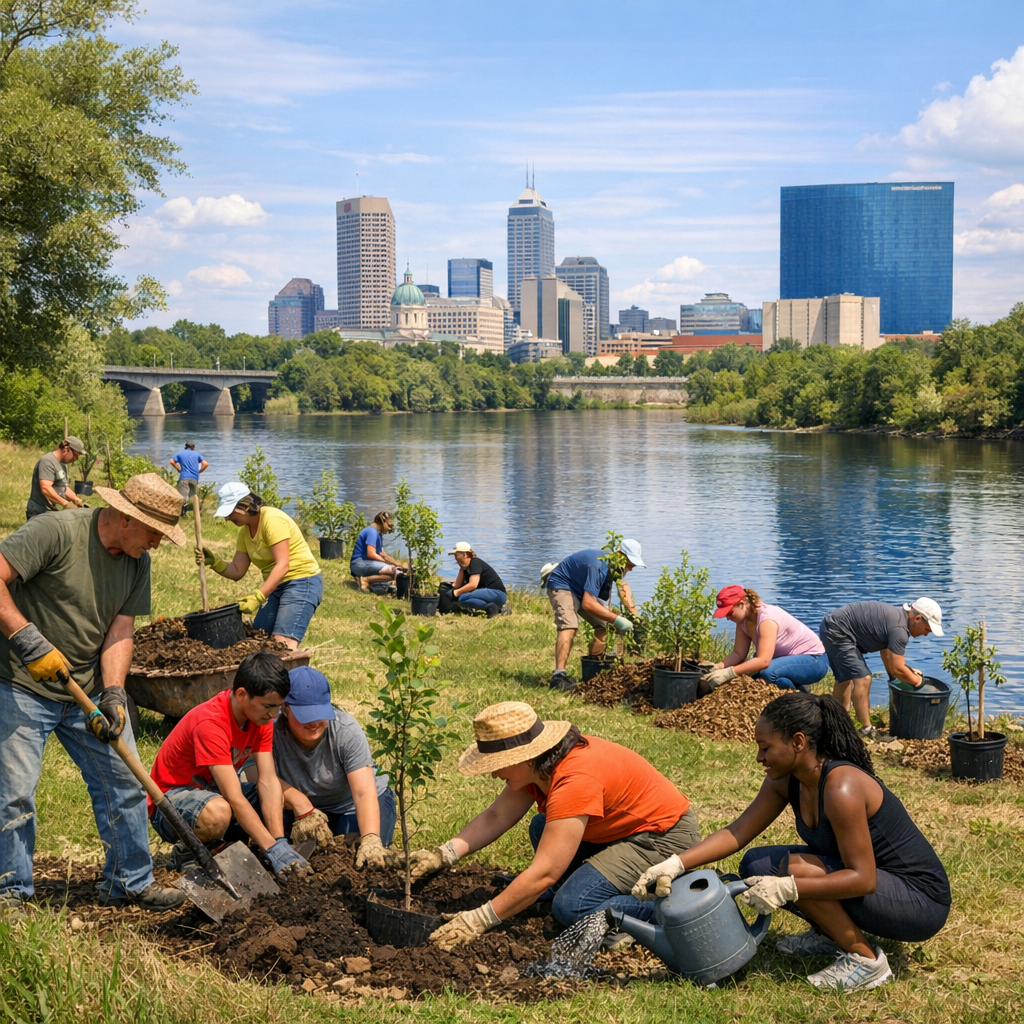
Organizations like Keep Indianapolis Beautiful (KIB) are at the forefront of engaging diverse communities to create vibrant public spaces. KIB’s mission focuses on planting trees, building greenspaces, and removing invasive species to restore habitats along major waterways such as the White River and Fall Creek. These projects not only beautify the city but also improve biodiversity and stabilize riverbanks.
Urban Forestry and Climate Resilience
The City-County Council has been considering significant investments in urban forest preservation. With less than 15% of Marion County’s original forest cover remaining, preserving these green spaces is crucial for environmental and economic benefits. Efforts to protect and expand urban forests contribute to climate resilience and enhance the quality of life for residents.
Sustainable Infrastructure and Renewable Energy
The Indianapolis Airport Authority (IAA) demonstrates a strong commitment to sustainability. The airport hosts the largest solar farm on any airport property worldwide, featuring 87,478 solar panels that generate enough energy to power approximately 3,675 average American homes annually. Additionally, the IAA has implemented water conservation measures and recycling programs to minimize environmental impact.
Addressing Air Quality Concerns
Recent reports have highlighted challenges in air quality within Marion County. The American Lung Association’s 2026 “State of the Air” report assigned failing grades to the county across all air pollution categories, underscoring the need for continued efforts to reduce emissions and improve air quality for residents.
Enhancing Public Parks and Green Spaces
Indianapolis has made significant investments in its park system, culminating in the opening of the Grassy Creek Environmental Community Center. This development is part of a broader $140 million effort to upgrade facilities across 42 parks citywide, including the transformation of 28 playgrounds in 26 parks. These enhancements aim to provide equitable access to quality recreational spaces for all residents.
Through these collective efforts, Indianapolis is making strides toward a more sustainable and resilient future, demonstrating the power of community involvement in environmental stewardship.