

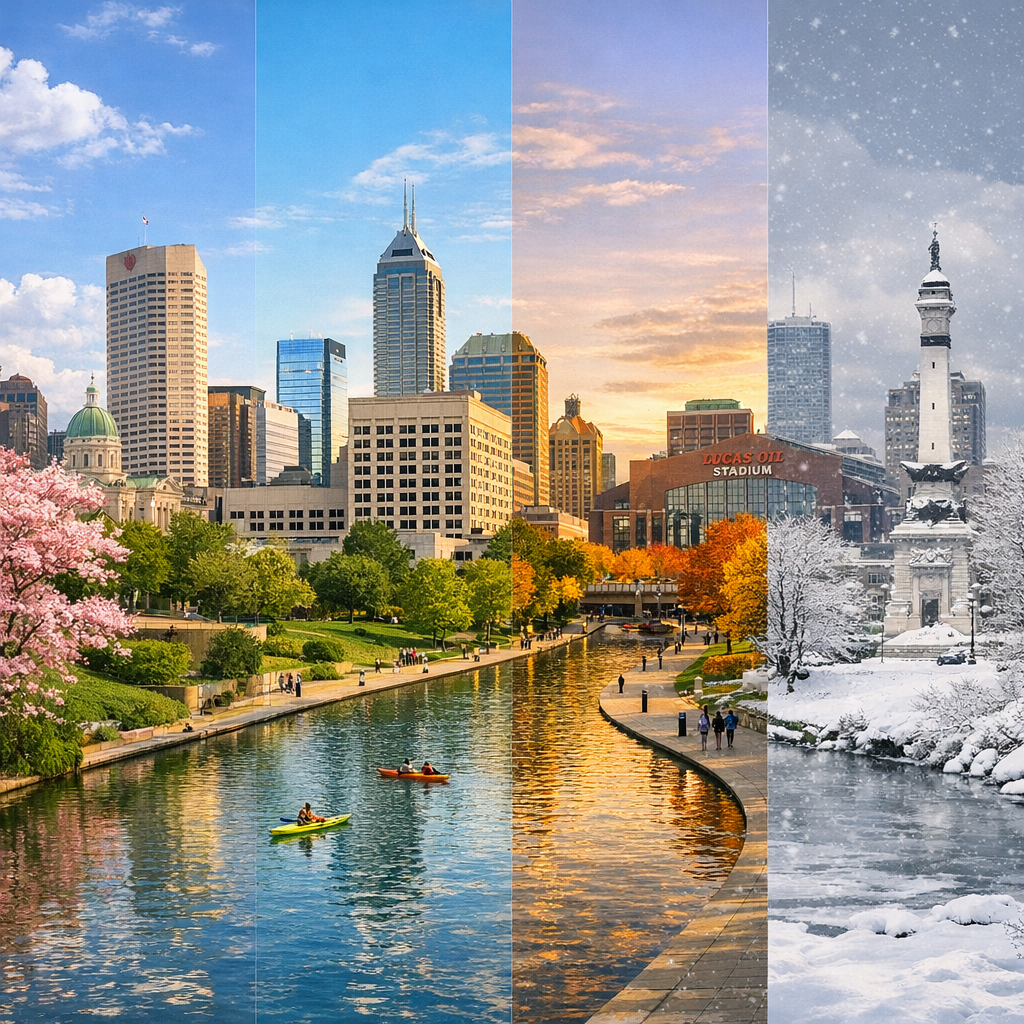
Indianapolis, situated in central Indiana, experiences a humid continental climate characterized by four distinct seasons: cold winters, warm and humid summers, and transitional periods in spring and autumn.
Seasonal Temperatures
During winter months, particularly in January, average high temperatures hover around 36°F (2°C), with lows dipping to approximately 21°F (-6°C). Conversely, July, the warmest month, sees average highs of 85°F (29°C) and lows around 66°F (19°C). It’s noteworthy that summer heat is often accompanied by high humidity levels, making temperatures feel warmer than they are.
Precipitation Patterns
Indianapolis receives an average annual precipitation of about 40 inches (102 cm). Rainfall is fairly evenly distributed throughout the year, with May typically being the wettest month. Snowfall varies annually, with the city averaging around 23 inches (58 cm) of snow each winter.
Climate Trends and Considerations
Recent analyses indicate that Indianapolis is experiencing longer and more intense heat streaks, with temperatures exceeding 87°F (31°C) for extended periods. Additionally, the city faces challenges related to urban heat islands, where densely built areas can be significantly warmer than surrounding regions. These factors underscore the importance of understanding and adapting to evolving climate patterns in the area.